September 3rd Keynote
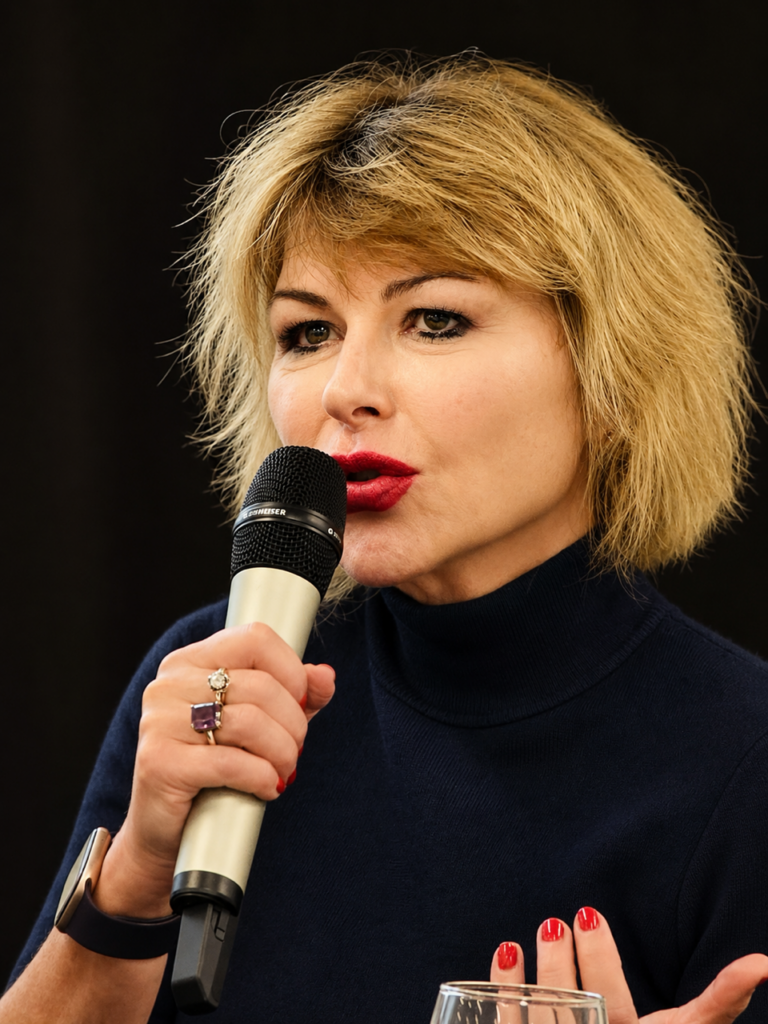
Dr. Agnieszka Piotrowska
From Cinema to AI and where the ethical boundaries lie?
When trauma is mediated, someone is always being placed: as witness, as the one who suffers, as the apparatus that records. This keynote argues that these positions, which trauma studies has tended to keep distinct, are being collapsed – first by documentary’s own manipulations of evidence, and now, more radically, by AI image-making.
I begin with documentary’s long unease about the archive. In Sarah Polley’s Stories We Tell, fabricated footage is passed off as found home movies; the forgery is not a deception but a reclamation, a way of seizing authorship over a family trauma whose truth was never anyone’s to hold. I read this against my own film Married to the Eiffel Tower, where the documentary apparatus is asked to witness a form of love and attachment it has no settled position from which to see, and where the looking itself becomes the ethical problem.
I then turn to some discussions of human machine encounters as a site of trauma, before looking at Agnieszka Holland’s Green Border, where trauma is not an event safely behind the image but a border being crossed in the present, and where the film’s form refuses the viewer any neutral place to stand. Holland’s cinema makes complicity a condition of watching rather than a theme within it.
Finally I bring these questions into the territory the conference flags as least settled: AI mediation. Drawing on my own practice of generating AI images using my own face, and on the frame I call techno-transference, I argue that AI collapses the positions documentary kept in tension – perpetrator-apparatus, witness, and unrecognised subject – into a single recursive act. The image has no event behind it, only form, and yet it can still wound. This, I suggest, is not new content for trauma studies but a new grammar.
Biography
Agnieszka Piotrowska PhD is a multi-award-winning filmmaker, theorist and author whose work moves between documentary, fiction and the emerging territory of AI-generated film. Her documentary Married to the Eiffel Tower, on objectum sexuality, has become a key reference point in debates about intimacy, attachment and the ethics of the documentary gaze, and is widely taught internationally. Her films have screened and been broadcast across the world, and her practice has consistently asked what the camera can and cannot ethically witness.
She is the author of several books, including Psychoanalysis and Ethics in Documentary Film (Edinburgh University Press) and more recently The Cinema of Agnieszka Holland: Anger and Ethics (Routledge, 2026). Her most recent book, AI Intimacy and Psychoanalysis (Routledge, 2026), develops her concept of techno-transference, a psychoanalytic framework for the unconscious projections we direct at AI systems, as well as looking at the cinema’s representations of human – machine representations.
She has held senior positions in higher education, including Head of the School of Media and Film at the University for the Creative Arts. She writes regularly on AI for Times Higher Education, and has been interviewed by the BBC, Times Radio and Sky News on AI and human relationships. Her current practice extends into AI filmmaking. Her short film Friend of a Friend, set in the Vumba Mountains of Zimbabwe, is an AI-generated work about human intimacy with a non-human presence, conceived as a counter-narrative to prevailing AI doom discourse. She holds part-time academic affiliations with Oxford Brookes University and the University of Staffordshire, co-hosts the Relational AI Diariespodcast, and writes regularly on AI, film and psychoanalysis
September 4th Keynote
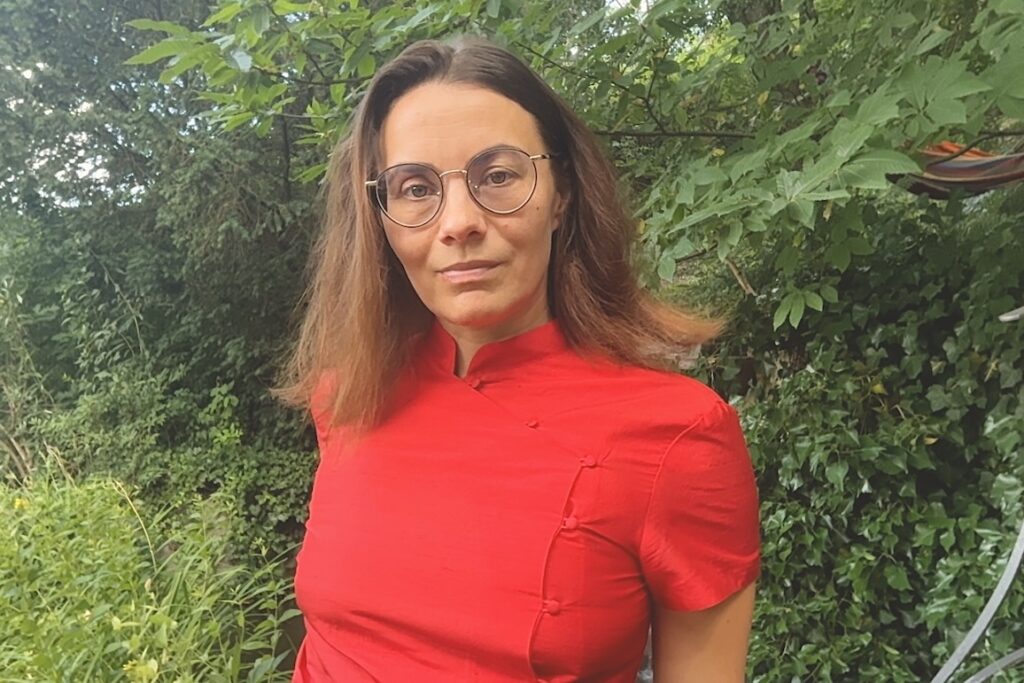
Dr. Paula Helm
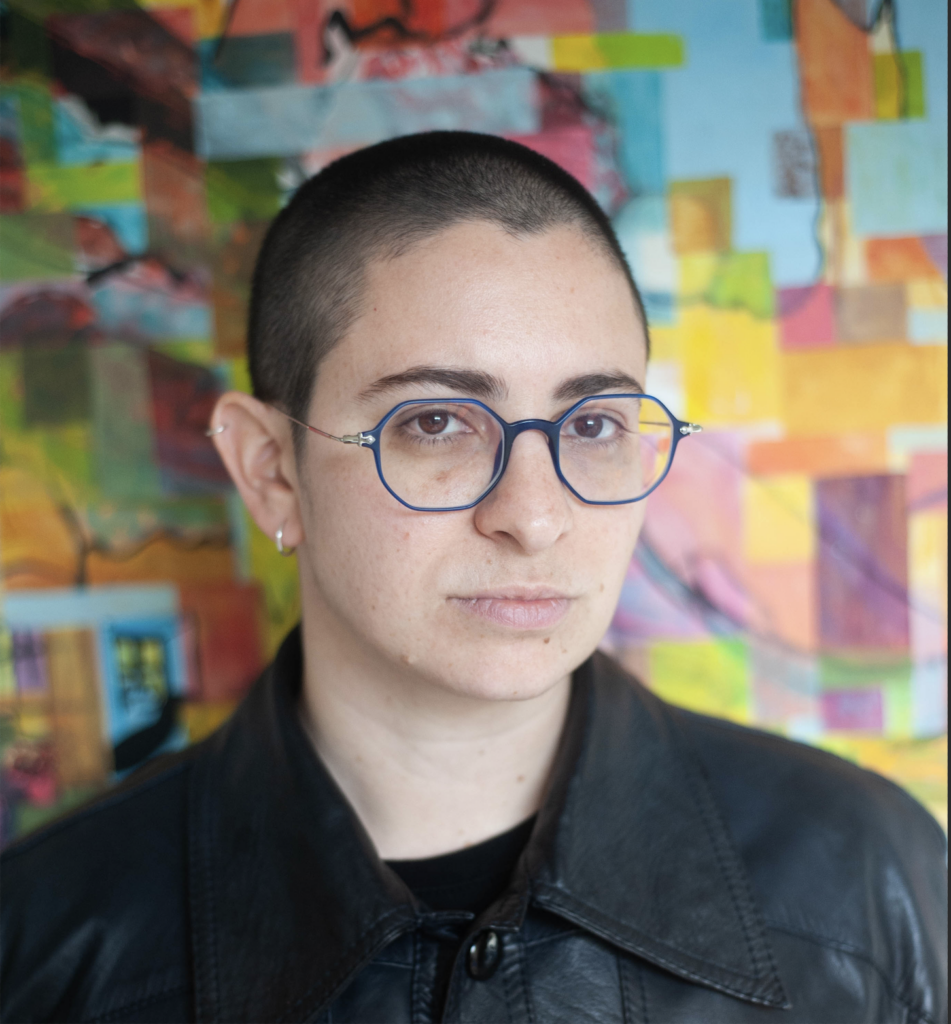
Dr. Delfina Martinez Pandiani
Rendering Vulnerability: AI, Trauma, and the Infrastructures of Recognition
This joint, interdisciplinary keynote examines how contemporary AI and data infrastructures reshape the conditions under which trauma and precarity become visible, legible, or obscured, and how they can “vulnerabilise” the very subjects they claim to protect. Our talk focuses on two sites where AI is mobilized to create data for “protection”: the regulation of platform-monetized family vlogs centred on children, and language translation in migration contexts. Drawing on these cases, we ask what it means for care and rights to depend on computational legibility. To do so, we mobilise Judith Butler’s insight that vulnerability remains ethically inert until recognized within specific regimes of perception. Building on this, we explore a protection paradox: for harms, risks, or rights to be acknowledged in platformed societies, they must first be rendered into datafied representations, thereby passing through infrastructures of extraction, surveillance, and categorization that themselves generate new regimes of exposure, commodification and flattening. Our first case concerns family vlogs, where intimacy is the commodity and children’s everyday experiences such as potty training, tantrums, or family rupture are systematically recorded, monetized, and then taken up in “AI for good” projects that seek to identify and regulate vulnerability, yet risk re-exposing and re-precarising the very lives they aim to safeguard. In dialogue with this case, we investigate trauma-(un)informed language and translation practices in migration contexts, where AI-mediated recognition of trauma and rights similarly depends on datafication that can enable but also undermine care. We examine these two cases from the interdisciplinary perspectives of media studies, data science, and critical AI research asking how technical infrastructures enact what counts as trauma, what is disregarded, flattened or treated as noise and probing the question how data-driven research can engage in relations of vulnerability without contributing to its precarisation.
Biography
Paula Helm is Professor for Empirical Ethics at the Center for Critical Computational Studies, Goethe University Frankfurt. Her work brings together Critical AI Studies, Empirical Ethics, and Science and Technology Studies. Trained in anthropology and peace and conflict research, she studies computational systems not only as technical artefacts, but as infrastructures through which values, power relations, and forms of knowledge are organised. Before joining C³S, Helm was Assistant Professor of Ethics and Critical Data Studies at the University of Amsterdam, where she served as Scientific Lead of the Empirical Ethics Research Group at the Amsterdam Institute for Advanced Studies and co-coordinated the MA track Cultural Data & AI, which combines critical inquiry with data science. Her research focuses on cultural diversity, critical data studies, platform economies, privacy and anonymity, language technology, and the ethical consequences of AI foundation models. A central concern in her work is how AI ethics can move beyond abstract principles and public-facing commitments toward reflexive empirical inquiry, infrastructural accountability, and more just forms of technological design.
Biography
Delfina Sol Martinez Pandiani is Assistant Professor of Cultural Data Analysis at the University of Amsterdam (UvA), at the Institute for Logic, Language and Computation (ILLC) and the Department of Media Studies. Their work explores how abstract social concepts—such as identity, toxicity, and vulnerability—are negotiated and computationally modeled in datafied environments. Drawing on critical AI studies, computer vision, digital humanities, and media and queer theory, they specialize in auditing, developing, and critiquing AI systems. They challenge binary assumptions like public/private and nature/culture, aiming to surface new ways of thinking about power, representation, and technological change. At the UvA, Delfina co-coordinates the MA track Cultural Data & AI, which combines critical inquiry with data science, and co-founded the Queer and Feminist Informatics Network (QFin). They hold a PhD in Computer Science, an MA in Digital Humanities from the University of Bologna, and a BA in Human Evolutionary Biology from Harvard University.